Showing posts with label Novel Review. Show all posts

Wednesday, May 11, 2011

Reading novels during exams

Don't ever start a John Grisham. It keeps you hooked till the last page meaning you can kiss good results bye-bye. And this happens even if the story isn't good. You throw the book down in the end and curse yourself for ever picking up such a time-waster. But reality remains. You have only two hours left to study for that certain Dr. Mahnaz Fatima exam and you know that things aren't going to be pretty for you now. "Why didn't I pick up a classic?", you ask yourself. Even though they're a thousand times better than the sleazy fiction nowadays, they don't leave you hanging at every chapter forcing you to go on. Your results are safe.

I made the mistake of starting Grisham's The Rainmaker just two days before the mid-terms. The reviews I got about it from my friends were, in one word, extreme. People either hate it or love it. Within the space of half-an-hour one person told me that 'it was one of his favourite books' and another said that 'it's one of the worst books Grisham has ever written'. Who do I believe? I can't blame myself for beginning to read it the same day. Hey, I was curious.

My diagnosis after finishing it? Not so extreme. The book was a huge waste of time, and Grisham has written better, in fact much better. But he's written much worse as well (The Client a case in point *gag*).The story was going good at the beginning, a young lawyer trying to find a job two months before graduation. These parts hit home, mostly because I'm two months away from graduation and without a job too! I could definitely relate to the ways that he employs in getting employment. I just hope I'm not as unsuccessful as he was.
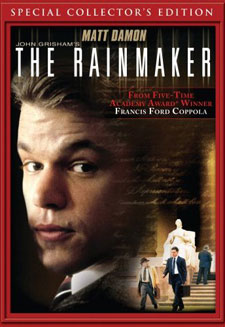
By the middle of the story you're hooked. The lawyer finds a client who is suing a huge firm which has similarly proportioned lawyers (i.e. equally as huge). Now the rookie has to fight the big guys. David versus Goliath. Interesting?

Not really. You keep waiting for the action to start, and realize at the end that what you were flipping over was the action. The novel ends with the classic Grisham twist-attempt. Something absolutely unpredictable happens in the last few pages, but it's too late for the story and seems forced. Not even close to the shocks produced by The Partner or The Testament. All in all The Rainmaker lives up to the reviews I received of it, an average between Awesome and Junk. After the last page, I was left with a bad taste in my mouth, and mountains of Managerial Policy chapters to read. Yikes!

Azma Humayun

Monday, January 24, 2011

Her First Murder...

... just went out of copyright!


That's right. The Queen of Crime Agatha Christie's works can now be accessed online for free by anyone willing to become an amateur detective, or else an amateur criminal!

Author of 70+ mystery books, Agatha Christie can be said to be the most popular writer of detective fiction of all time. No author has penned such intricate plots and unbelievable solutions. Reading an Agatha Christie is one brain-twisting activity, never a dull moment for a second!

Christie's amazing run of crime began with The Mysterious Affair at Styles, a confusing tale of the murder of the elderly mistress of Styles Court, an estate in England. The prime suspects are her stepsons, who depend upon her for their livelihood; and her husband of only a few months, who is accused of having married her for her money. As Emily Inglethorp has been poisoned in bed, it becomes extremely difficult to pinpoint the culprit.


The Bantam Books edition of the novel describes the suspects with these words:

" Her eldest son, JOHN CAVENDISH, who had the most to gain.
  Her husband, ALFRED INGLETHORP, who had the best alibi.
  John's wife, MARY, involved with DR. BAUERSTEIN, the first to call it murder.
  LAWRENCE CAVENDISH, the victim's younger son, who broke the murder cup.
  EVELYN HOWARD, who didn't show up until after the murder.
  CYNTHIA MURDOCH, protegee of the murdered woman, the only suspect with access to poison."

Any one of them could have committed the deed. Enter Hercule Poirot, the eccentric Belgian detective with extraordinary powers of not just Holmesian observation but also imagination. The murderer won't be at large for long!

The best thing about any Agatha Christie is it's short length of around 200 pages, and its inclusion of all elements that can make a story interesting, be it action, romance, psychology, morality, or just plain gruesome criminal fun.

Other gems by the same author include: The Murder of Roger Ackroyd, Murder on the Orient Express, Death on the Nile, Taken at the Flood and many more. All classics in their own right.


Or pay a visit to the IBA Library if you're a fan of traditional paper.


Sources of Images: 
http://www.sxc.hu/pic/m/s/sa/sateda/1177936_knife_in_hand.jpg
http://images-eu.amazon.com/images/P/0333989066.02.LZZZZZZZ.jpg

Friday, December 24, 2010

Who else was disappointed by The Lost Symbol?

Title: The Lost Symbol
Author: Dan Brown
Year of Publication: 2009
Genre: Thriller


The first half was an absolute drag. 

This from the man who brought us brilliant page-turners in the past! As a much-awaited sequel to the blockbusters Angels & Demons and The Da Vinci Code, The Lost Symbol has failed to live up to the hype. 

Firstly, the entire concept of the Ancient Mysteries is beyond me - a power that can turn humans into gods, that power residing within one’s mind, can only be unlocked through some mysterious symbol, that symbol being only a word, and that word being a book hidden beneath an underground pyramid…. or was it an underground portal? Dan Brown is all over the place. The reader fails to understand what exactly is being looked for. Characters crowd the book without having any reason of being there. And I could not grasp the urgency of solving the mystery. There is no end-of-the-world-bringing subatomic bomb ticking (A&D) nor is there a solve-the-puzzle-and-clear your-name-before-the-police-catches-you sword hanging over the characters’ heads (DVC). The whole objective here is to rescue a Yale professor, someone the reader never feels sympathetic enough towards.

So one just can’t understand the significance of either the plot or the characters. I even found myself rooting for he bad guy at one point!

The only good thing in the story (other than a small plot twist towards the end) is Robert Langdon. The character is one of the few totally original personalities of fiction out there today, even though his claustrophobia is a little overdone now. Sadly, one doesn’t see enough of Langdon’s problem-solving skills this time (probably because there is not much of a problem here to begin with!).

Dan Brown, in the past, has specialized in bringing conspiracy theories to light and giving them a completely believable and realistic form. Here, however, he tries to find a connection between science and the supernatural, and, in my point-of-view, fails miserably. Like, in one experiment, a character is shown succeeding in measuring the mass of a human soul through a ridiculously childish experiment….?? Don’t get me started!

What can one say but that Dan Brown has completely botched it for once (or rather the second time; Digital Fortress was no plume in the hat either). Here’s hoping that something better is to come. And here’s wishing that this particular symbol had stayed lost!

Azma Humayun 

Source of Image: http://images.smh.com.au/ftsmh/ffximage/2009/09/17/lost_symbol_narrowweb__300x462,0.jpg

Wednesday, December 8, 2010

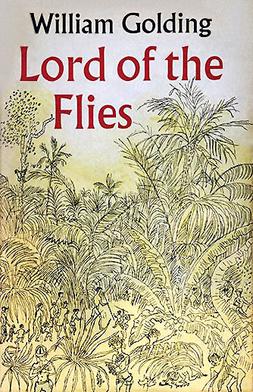
Savage Lands & Inner Demons (Part II): Lord of the Flies

This book was one of those featured in Part 1of the IBA Literary Society's 'Literary Discussion Series' Event entitled 'Savage Lands & Inner Demons' held in IBA Main Campus on November 25, 2010.

Title: Lord of the Flies
Author: William Golding
Year of Publication: 1954
GenreMorality, Adventure
Available Online? No

There is a heart of darkness in every man; a palpitating, throbbing proclivity towards evil and malice, which only shows itself in times of desperation and survival. Evil resonates within the heart of humanity: call it Satan, Lucifer, capitalism, communism or the survival of the fittest. This habitual inclination of ours is often controlled and channeled through society and its fetters. But purity, piety and virtue seem to vanish when man is exposed to his primal instinct and true, carnal nature. 

The loss of innocence and man’s descent or fall into darkness is epic; after all, Adam and Eve, the first humans created by God succumbed to temptations! It seems the seed of evil and cruelty is embedded in the heart of new-born child before he or she even realizes the repercussion of what will come into fruition. This evil culminates into malice that was unimaginable and incomprehensible until one experiences the torment of its bearing. 

What could be more apt to fit this theme than the novel or the story that defined the true nature of man? 

His malice, greed, hunger for power and Darwinian urges towards survival can best be seen in the novel that aptly depicted the loss of humanity; the loss of innocence; the loss of childhood in a stride. 

‘The Lord of the Flies’, by William Golding narrates the story of young boys marooned on an island after a plane crash in what seems to be a post apocalyptic world. (Golding, 1954)

At first, the young boys try to act in unison, understanding that one half of the group should stay and watch the signal fire, making sure its lit perpetually, so that a ship can spot the children and come to rescue.

The instinctive urge to be civilized is wrought with the frustration that comes with leadership, obeying rules and acting in an ethical manner to fit into a framework of that society desires us to be. This increases the appeal of violence and brutality as well as totalitarianism. Taken from an allegorical perspective, the novel still depicts man’s descent into savagery: how a social system collapses to lead way towards anarchy and chaos. 

For any one who is a fan of twentieth century literature, this book cannot be ignored. The terror of a child's descent into darkness and the heart wrenching tale can be interpreted on so many planes; from the moment of the crash, the words in the book speak for themselves and no praise merits this gem of literature! 

Maham Usman

Source of Image: http://upload.wikimedia.org/wikipedia/en/9/9b/LordOfTheFliesBookCover.jpg

Savage Lands & Inner Demons (Part I): Heart of Darkness

This book was one of those featured in Part 1of the IBA Literary Society's 'Literary Discussion Series' Event entitled 'Savage Lands & Inner Demons' held in IBA Main Campus on November 25, 2010.

Title: Heart of Darkness
Author: Joseph Conrad
Year of Publication: 1902
Genre: Novella, Colonialism & Morality
Available at the IBA Library? Yes
Available Online? Yes, here

“[The episode] seemed somehow to throw a kind of light on everything about me—and into my thoughts. It was somber enough too—and pitiful—not extraordinary in any way—not very clear either. No, not very clear. And yet it seemed to throw a kind of light.”         - Heart of Darkness

Are questions of morality ever clear? What is not governed by rules must be open to interpretation, must it not? Because every man’s morality is different from everyone else’s. So how does one decide what is right and what is wrong? Especially when one resides in a society where no laws shackle one to any determined code?

“[It was] not very clear” is how Joseph Conrad refers to this subject in his book Heart of Darkness (1902) and he does that by telling us a story which according to him is also “not very clear” but is meaningful for readers just the same. The story is of Charles Marlow, a captain of a steamboat who is commissioned to travel to the very ends of the Congo River, surrounded by the wilderness of dark jungles and savage societies, on a mission for the company he works for. The savagery that he witnesses is, however, not performed by the native cannibals, but by the representatives of the so-called civilized European societies sent there to ‘enlighten the natives’. These Europeans found themselves unregulated by any governing body and consequently made use of this freedom to act in all sorts of barbaric ways imaginable. Revolted by what he witnesses, Marlow puts all his hopes into a meeting with Kurtz, an ivory dealer whom it is part of his mission to fetch from his station. Kurtz is known to be a genius, an enlightened man, sent to the colony to in turn enlighten the natives and deliver them from their state of degeneration. Marlow desperately longs to meet this enlightened Kurtz, but is in for disappointment, and is forced to reassess his own values.

Heart of Darkness superbly illustrates how selfishness, greed and lust for power can overcome any nobler ideas, if left unchecked by the lack of a society or a strong code of ethics.

Azma Humayun


Source of Image: http://www.shawnswaner.com/content/binary/image001.gif

Friday, November 12, 2010

A Whale of a Venture

Title: Moby Dick
Author: Herman Melville
Year of Publication: 1851
Genre: Classic Adventure
Rating: 3.5/5
Available at the IBA Library? Yes
Available Online? Yes


Summer still had a few weeks to go and internship was going to be over in a week. To kill the many days I had ahead of me, I couldn’t have done better than pick up Moby Dick to read. Little did I know that this book about a whale would turn out to be a whale of a book, gargantuan – both in size and scope. It took me a month to read this 500 odd page novel, and the task was surely momentous. I challenge anybody brave enough to try finishing this book in less than 30 days. The winner gets a special mention on our blog, and a salute from me every time s/he passes by!
The reason reading this book seems such an uphill task is not just its length (which isn’t something out-of-this-world, especially compared to Tolstoy’s and other such classics), it is the tone and the descriptions that leave you with little motivation to continue with your perusal. However, you still cannot let go of the whale for very long, and the book you had put down swearing never to lift again would once more be in your hands, providing more joy and annoyance.

Moby Dick covers a wide range of themes, the principal theme being obsession. The narrator of the story is Ishmael, a merchant sailor out on his first whaling cruise on the ship the Pequod, the captain of which is on a cruise of retribution. Having had his leg eaten away by a ferocious white sperm whale on an earlier cruise, Captain Ahab is now hell-bent to chasing the whale, dubbed Moby Dick, all around the world to have his ultimate vendetta by killing it.

His obsession is not only unhealthy (keeping him up at nights) but also dangerous. He puts his entire crew and ship in peril and despite realizes the futility of his mania, he does not have the will power to forget. The solitary musings of the captain make for interesting reading and so do his dialogues with his chief mate, Starbuck. These show the inner conflict within the captain.

The human parts in the book are, however, sandwiched between lengthy descriptions of whales and the profession of whale-hunting. These dominate the story in dimension, and however much were necessary to familiarize the nineteenth century audience to the then only heard-of phenomena, they only end up making the book a drag for modern readers. The one good thing about these descriptive passages is the humour and ‘epic’ nature of Melville’s prose. Indeed, his philosophical musings are what will have the most impact with the readers.

"There is a wisdom that is woe; but there is a woe that is madness. And there is a Catskill eagle in some souls that can alike dive down into the blackest gorges, and soar out of them again and become invisible in the sunny spaces. And even if he for ever flies within the gorge, that gorge is in the mountains; so that even in his lowest swoop the mountain eagle is still higher than other birds upon the plain, even though they soar."
- Moby Dick, Herman Melville

Melville can render even the most boring of descriptions amusing, for example, while noting that the whale does not have a nose, he writes:

“Sure it is, nevertheless, that the Sperm Whale has no proper olfactories. But what does he want of them? No roses, no violets, no Cologne-water in the sea.”

- Moby Dick, Herman Melville

The story is deep, the characters involving, the descriptions tedious (Ishmael spends countless chapters lamenting the lack of good whale depictions in art), and the prose melodic and heavy. However much you may hate the book, you cannot dare to hate the author. People just cannot write like that anymore.

Word of Caution – To be read only if you have lots of spare time and nothing else to do, otherwise you would never get to the end.

Azma Humayun

Source of Image:http://www.penguinclassics.co.uk/